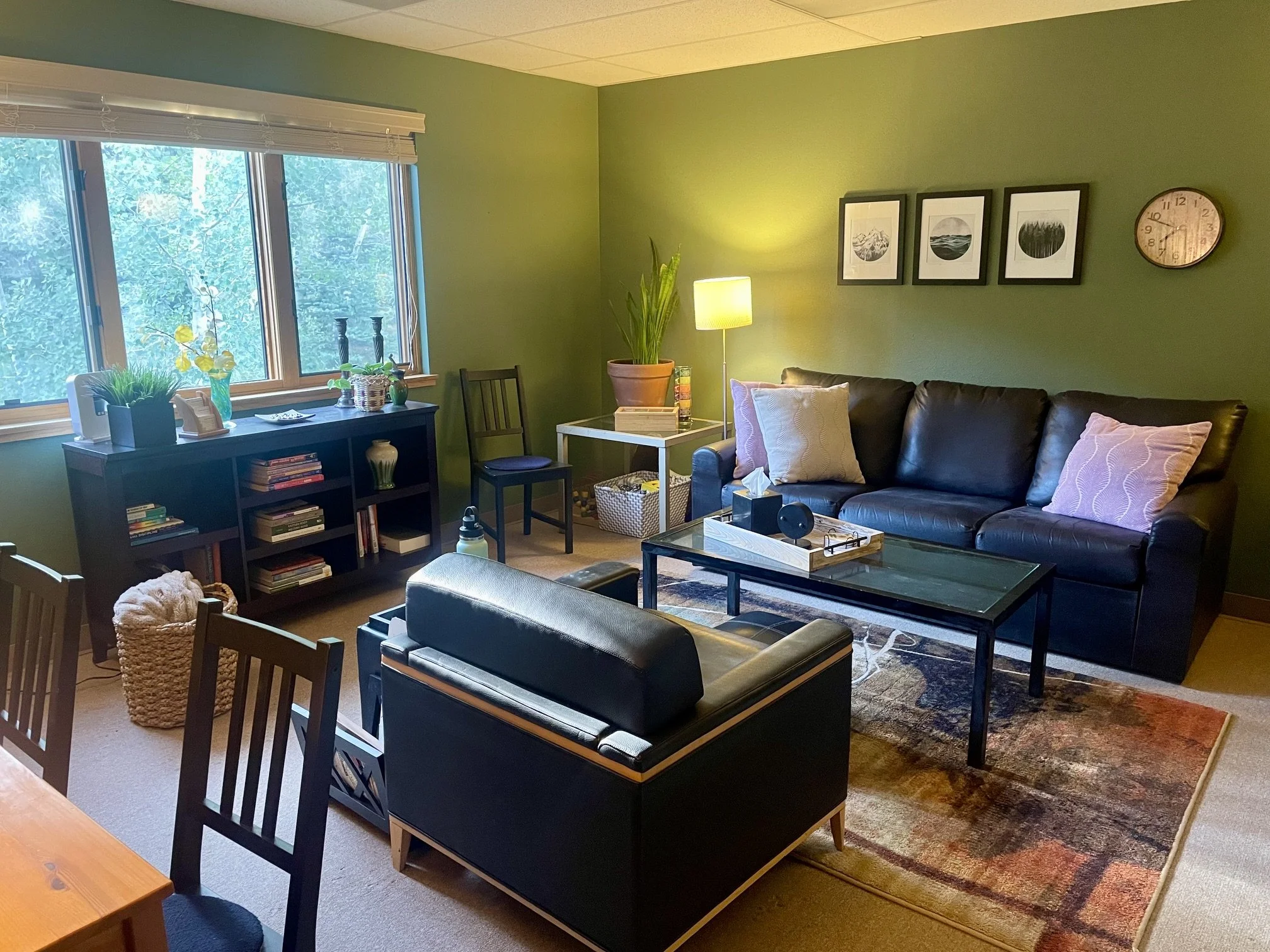
Intensive therapy speaks to my heart, as someone who loves deep connection. I offer one, two, or three-day intensives, with four hours of therapy each day. These intensives are an invitation to settle into healing. The time-frame gives my client’s the spaciousness their nervous system needs to unlearn hypervigilance and to come to believe that they can live without being driven by negative beliefs, self-cruelty, anxiety, or depression. These clients come for focused, intense work, and leave with a deep sense of self-love and agency to bring about a better future.
Before a client walks into my door for an intensive, we will have a 90 minute session to set goals and go over their history. I will ask the question, “After your intensive, how do you want to feel?”. The answer will be completely different for every person I work with, and that answer will guide our work. In our 90 minute pre-intensive we’ll determine a few of the factors getting in the way of how the client wants to feel in the world, including past trauma, current negative beliefs or symptoms like anxiety, depression, perfectionism, or self-criticism. This will help to create a game plan for our 4-12 hours together.
In those 4-12 hours, we are focused on that goal. I use parts-work to enhance self-compassion for the parts of the client that make it hard to change, EMDR to help decrease the impact of trauma, and mindfulness and polyvagal activities to increase the client’s capacity to self-regulate. We have space and time to wrestle with hard questions, sit with discomfort, and move through to the other side.
We also take breaks every hour to move a little bit and care for our bodies as needed. We take a 30 minute lunch break to eat, walk outside, or gaze out the window, and then return ready to reconnect. I use my skills from teaching yoga throughout to help us stay grounded and flexible while moving through hard work.
People looking for therapy are looking for change. They have hit a wall and no longer want to live dogged by anxiety or depression, ruminating on self-criticism, driven by obsessive or addictive behaviors. Intensive therapy means more work, vulnerability, and challenge up front- but also very quick gains. 4-12 hours of therapy in just a few days can bring about deep insight, the cracking of long-held negative beliefs, and the time to process traumatic events or work on mindfulness and body awareness skills. Anyone who has the flexibility to carve out up to three days of therapy and has the motivation for change can benefit.
“The truth is that things don’t really get solved. They come together and they fall apart. Then they come together again and fall apart again. It’s just like that. The healing comes from letting there be room for all of this to happen: room for grief, for relief, for misery, for joy.”